
By Eric Johnson
MORGANTON (April 16, 2026) – For North Carolina’s public universities, the balance between idealism and pragmatism was baked in from the beginning. The state’s original constitution calls for the promotion of “all useful learning,” and the University of North Carolina’s 1789 charter commends higher education to “consult the happiness of a rising generation.”
Good jobs and good lives, both/and, right from the start.
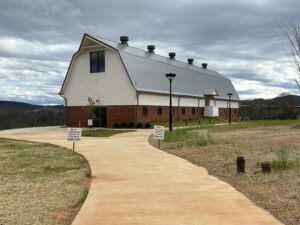
When the UNC System Board of Governors met this week in Morganton, under the roof of the North Carolina School of Science and Mathematics’ gloriously renovated cattle barn (talk about pragmatism!), one of the big items on the agenda was a review of a new Workforce Alignment Report.
“The UNC System and its Board of Governors are now focusing on the success of UNC graduates in the labor force as well as meeting employer needs,” the report promises. “The UNC System must be prepared to generate skilled and ‘work-ready’ talent for the state, particularly in a rapidly changing jobs landscape.”
This is the kind of language that sometimes makes humanists break out in hives, leaning into the idea that college is simply about jobs and income and hedging economic anxiety. But delving into the details of the report, the most striking aspect of today’s workforce demands is that they look an awful lot like yesterday’s workforce demands.
North Carolina needs teachers; it needs nurses; it needs engineers and scientists and pharmacists. It needs smart people to serve core public duties.
The terminology changes — health practitioners in place of doctors; finance professionals in place of bankers — but the basic wants of a growing state have remained constant. We need people to design and build things, people with the knowledge and patience to heal the sick, people with the mix of analytical and relational skills to build businesses and grow the economy.
And those are exactly the kind of people our public universities have been teaching and graduating for the last couple centuries.
There is an enormous amount of anxiety about the job market right now, and understandably so. Anyone with a perfectly confident prediction of how artificial intelligence or trade patterns or demographics will shape careers over the next few decades is bluffing. And students are feeling that uncertainty as they navigate college decisions. Every week brings a fresh set of articles about how once sure-fire tickets to job security, like software programming or data analysis, are looking shakier with the steady advance of technology.
As many philosophical greats have noted, it’s tough to make predictions, especially about the future.
Which makes it all the more reassuring that when universities foresee a growing need for civil engineers or general education teachers or speech therapists, they’re not talking about innovative new fields so much as the bread and butter of what public institutions have always done: Getting people ready for high-skilled, difficult professions that matter for the health and prosperity of our state.
Effective higher education doesn’t chase fads; it delivers on fundamentals.
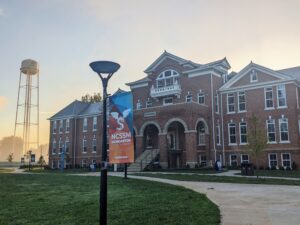
The School of Science and Math is a brilliant example. Policymakers in the 1970s and 1980s could see our state’s industrial and agricultural economy shifting more toward science and technology, and they wanted to make sure we could compete.
It was a novelist and playwright, John Ehle, who came up with the notion of a residential high school that would draw promising math and science students from every part of the state, put them under the same roof, and give them an extraordinarily rigorous education that included the arts and humanities.
The goal wasn’t just to boost budding young scientists and keep them in the state, but to make them well-rounded and adaptable.
It worked. NCSSM’s original campus in Durham graduated Christina Koch, who just got home from a much-noticed trip around the moon. It also taught Rhiannon Giddens, the MacArthur Genius who reimagined roots music, reinvigorated the Durham arts scene, and plans to spend the summer touring with Mavis Staples. Both/and.
Scroll through the workforce report, and you’ll find that a growing North Carolina has a growing appetite for musicians and preachers and family therapists, too, alongside all of those nurses and mechanical engineers.
Predicting the future is hard, but learning from the past is something North Carolina has managed pretty well. Investing in the talent and tenacity of our people, growing our public institutions to meet the aspirations of a rising generation — that’s the mission, now and always.
Eric Johnson is a writer in Chapel Hill and a senior advisor at the UNC System.
John says
Throwing money at a problem is not always the answer.
I agree we need to pay our K-12 teachers not professors more to be competitive. Get rid of the fat and bearocucy and wasted wok programs in our schools and universities. You don’t need a whole bunch of administrators in the system. I love what the community colleges are doing.to prepare for the future. I only wish we were doing a better job preparing our K-12.
Shirley Ort says
Excellent article, Eric, as usual. Both/and!